Leadership Messages (Medical Physics)
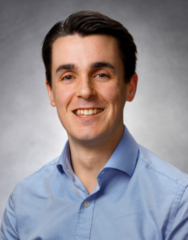
I’m happy to have the opportunity to introduce you to the Medical Physics Residency Program at MD Anderson Cancer Center at Cooper.
Medical physics residencies have existed in some form for many years. Before the American Board of Radiology began to require residency training for medical physics graduates, many programs existed as an alternative way of entering the field for physicists who had started a different career path. Graduates from medical physics programs were hired as junior physicists and did their training on the job. Therefore, training of new physicists suffered from high variation in quality.
Our residency program was started following positive educational experiences with local medical physics graduate students. Since that time, we have been able to cultivate an environment conducive to teaching future medical physicists. Our staff understand that educating the next generation is critical not only to the furthering of the field, but also to the sharpening of their own skills.
We received our accreditation from CAMPEP in 2019. Since then, we have graduated 6 residents and all have moved into positions as clinical physicists. We recently welcomed our eighth resident in July 2025. Though we are a small department, we have tremendous resources to draw on both internally and through our partner-level affiliation with MD Anderson Cancer Center. Utilizing these resources gives us the ability to provide residents with a high quality combination of education and on-the-job experience to branch the years between graduate school and their first clinical positions.
Our program is designed to provide in-depth training in the modern practice of the application of physics to radiation oncology. The goals of the program are to produce fully independent medical physicists capable of integrating with and working with a team of radiation oncologists, nurses, therapists, and dosimetrists.
Residency is a critical stepping stone to a successful career. The experiences available to residents are dependent both on the equipment in their clinics as well as the experience of their faculty. Our greatest strength of our program is the camaraderie, experience, and enthusiasm of our faculty. We have a support staff of physicists eager to help and teach residents during their two years here. We welcome your interest in our program and look forward to the opportunity to meet you.
Michael Walsh, MS, DABR
Program Director, Medical Physics Residency
I am delighted to be writing to you about the Medical Physics Residency Program at MD Anderson Cancer Center at Cooper.
Medical physicists, before the advent of residency programs, typically entered the workforce directly from graduate school. I was incredibly fortunate that my first job was at William Beaumont Hospital, in Michigan, where I had the privilege of working with many great medical physicists, including fifteen AAPM fellows, and receiving broad-based training on cutting-edge technology in a dynamic and stimulating environment.
I was lucky. Many “first jobs” in medical physics weren’t so conducive to professional development. Too often, new graduates could be asked to work in isolation as the sole physicist at a clinic, with little mentoring, feedback, or support. They may be asked to serve only a narrow clinical function, such as linac QA and chart checks, with little exposure to the full range of technology and duties a medical physicist could have familiarity with.
I see residency as, in effect, an effort to guarantee new physicists a favorable “first job” environment. A residency should guarantee close access to collegial, experienced physicists for feedback and expertise. A residency should guarantee a broad range of duties: not just QA and chart checks, but brachytherapy, treatment planning, commissioning, and so on. A residency should guarantee a department equipped with up-to-date technology and committed to clinical improvement and modern safety and quality practices.
Residency programs are responsible for upholding CAMPEP educational standards, but I don’t see residency as an extension of school. Before the advent of residency programs, you would already be a junior physicist with clinical responsibilities. In that spirit, I see residents as physicists not students, and my expectation is that graduates will be experienced medical physicists, not someone just ready for their first job. In the end, a residency has to take you farther than two years of being traditionally “on-the-job.”
Before coming to the MD Anderson Cancer Center at Cooper, I was a residency director and also built a certificate program from scratch. I’ve thought a lot about medical physics training, and I hope this is reflected in our residency program. I think we have a great staff for this, engaged and enthusiastic about their work. Year after year, in “employee engagement” surveys, our physicists and dosimetrists have scored in the 99th-percentile nationally, reflecting the dedication with which they approach their work and bring to residency training. In 2019, we were a finalist for the AAPM Innovations in Medical Physics Education award.
To all of you visiting our website and thinking of applying, welcome!
Leonard Kim, MS, AMusD, DABR
Chief Medical Physicist